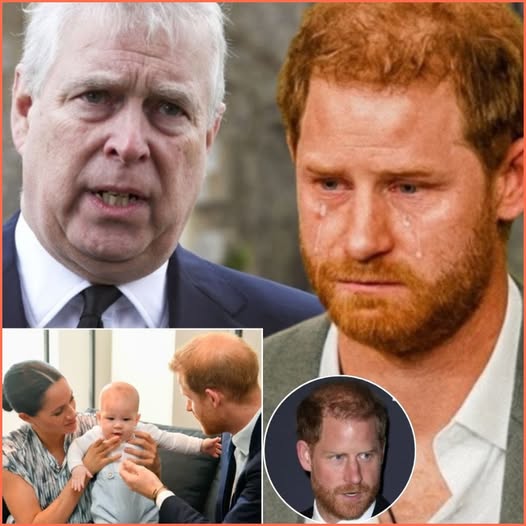
The Unlikely Mentor: Prince Andrew’s “Unsolicited Advice” to Harry
In the gilded, drafty hallways of the Royal Lodge, where the tea is lukewarm and the portraits seem to judge you with increasing intensity, a new voice has emerged from the shadows of royal retirement. Prince Andrew, the Duke of York, has reportedly decided that he is the perfect candidate to offer a “guiding hand” to his nephew, Prince Harry.

While the world has been focused on the “Spare” and his Netflix specials, Andrew has been quietly observing from the sidelines—mostly because the sidelines are the only place he’s allowed to be these days. In what can only be described as a masterclass in irony, sources suggest Andrew feels a “kinship” with the California-based prince. After all, they both know what it’s like to be the brother of a King, and they both know what it’s like to have a complicated relationship with the HR department at Buckingham Palace.
The “Royal Exile” Club
Imagine a clandestine Zoom call between Montecito and Windsor. Andrew, wearing a slightly pained expression and a jumper that smells of mothballs, leans into the camera.
“Harry, dear boy,” he might say, “you’re doing it all wrong. You’re complaining about the press? I once sat down with Emily Maitlis for forty-five minutes and thought it went splendidly. It’s all about confidence, Harry! If you’re going to be misunderstood, do it with a straight face and a very specific alibi involving a Pizza Express in Woking.”
To the public, the idea of Andrew mentoring Harry is like a captain of the Titanic offering navigation tips to a jet-ski enthusiast. One left for love and a multi-million dollar Spotify deal; the other left because… well, because the public demanded it with pitchforks and very loud editorials.
A Shared History of Being “Second”
The core of Andrew’s supposed “outreach” stems from the burden of the spare. For decades, Andrew was the “War Hero,” the favorite son, the man who added a bit of dash to the monarchy. Then came the 90s, the 2000s, and a series of choices that made Harry’s “Las Vegas billiards” phase look like a Sunday School picnic.
In Andrew’s mind, Harry’s decision to air the family’s dirty laundry in a memoir is a missed opportunity. “Why write a book, Harry?” Andrew might muse while walking his Corgis. “I simply stayed in a massive house and hoped everyone would forget I existed. It’s much less work than a six-part documentary series.”
The Verdict
The entertainment value here lies in the sheer lack of self-awareness. There is something inherently comedic about the idea of the Duke of York—a man currently synonymous with “royal PR disaster”—trying to bridge the gap between the Sussexes and the Crown.
While Harry continues to build his life in the sunshine of California, Andrew remains in the misty shadows of the Great Park, perhaps waiting for the phone to ring. He sees himself as a seasoned veteran of royal scandal, a man who has seen the “Firm” from the inside out and lived to tell the tale (though he’d prefer you didn’t ask too many follow-up questions).
Ultimately, if Andrew truly wants to help Harry, the best advice he could give is the one he rarely follows himself: Sometimes, saying nothing at all is the most royal thing you can do.
Leave a Reply
You must be logged in to post a comment.